
Currency
 AED
AED
 AFN
AFN
 ALL
ALL
 AMD
AMD
 ANG
ANG
 AUD
AUD
 AWG
AWG
 AZN
AZN
 BAM
BAM
 BBD
BBD
 BDT
BDT
 BIF
BIF
 BND
BND
 BOB
BOB
 BSD
BSD
 BWP
BWP
 BZD
BZD
 CAD
CAD
 CDF
CDF
 CHF
CHF
 CNY
CNY
 CRC
CRC
 CVE
CVE
 CZK
CZK
 DJF
DJF
 DKK
DKK
 DOP
DOP
 DZD
DZD
 ETB
ETB
 EUR
EUR
 FJD
FJD
 FKP
FKP
 GBP
GBP
 GMD
GMD
 GNF
GNF
 GTQ
GTQ
 GYD
GYD
 HKD
HKD
 HNL
HNL
 IDR
IDR
 ILS
ILS
 INR
INR
 ISK
ISK
 JMD
JMD
 JPY
JPY
 KES
KES
 KGS
KGS
 KHR
KHR
 KMF
KMF
 KRW
KRW
 KYD
KYD
 KZT
KZT
 LAK
LAK
 LBP
LBP
 LKR
LKR
 MAD
MAD
 MDL
MDL
 MKD
MKD
 MMK
MMK
 MNT
MNT
 MOP
MOP
 MUR
MUR
 MVR
MVR
 MWK
MWK
 MYR
MYR
 NIO
NIO
 NPR
NPR
 NZD
NZD
 PEN
PEN
 PGK
PGK
 PHP
PHP
 PLN
PLN
 PYG
PYG
 QAR
QAR
 RON
RON
 RSD
RSD
 RWF
RWF
 SAR
SAR
 SBD
SBD
 SEK
SEK
 SGD
SGD
 SHP
SHP
 SLL
SLL
 STD
STD
 THB
THB
 TJS
TJS
 TOP
TOP
 TTD
TTD
 TWD
TWD
 TZS
TZS
 UGX
UGX
 USD
USD
 UYU
UYU
 UZS
UZS
 VND
VND
 VUV
VUV
 WST
WST
 XAF
XAF
 XCD
XOF
XPF
XCD
XOF
XPF
 YER
YER

The Raw Material
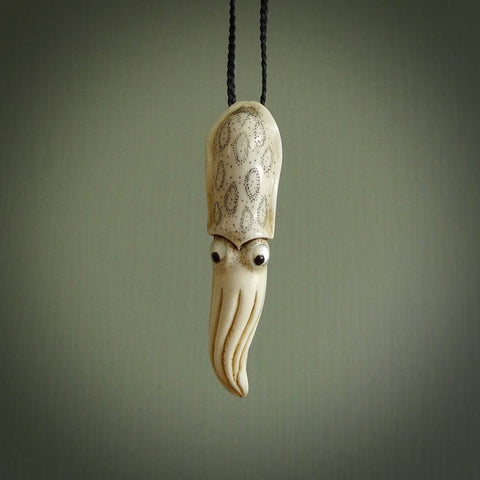
Natural Materials
Our pendants are crafted from natural materials. We use mostly locally sourced materials - New Zealand jade (also known locally as greenstone or pounamu), natural bone (untreated with any bleach or chemicals) and pāua shell which is collected from our coastal waters.
We also use other materials that are not sourced in New Zealand. Our Woolly Mammoth tusk comes from Alaska - we have certified its use with CITES so you can be assured that it is fine for us to use. It is a material that we love for its variation in grain and colour - each piece is different and unique and it is very, very old!
We are also sourcing jade from other countries where we find stone with an interesting look and which suits some of our new designs. The source of the material is noted on the product page.
All of our materials are genuine and natural - we don't bleach or colour them in any way. As a result, each carved piece will vary a little in colour and is unique - we photograph individual pieces so that you can see what you will receive.
Selecting the right material plays a big part in creating carvings that are unique and have the right look and feel. Our artists will often create a piece after studying the raw material and carving it to utilise any natural features that are unusual or unique. This is particularly the case with jade which can vary significantly in colouring, structure and in its translucency - some carvers have a genuine 'feel' for the stone they are working with, and this is very evident in the creative quality of the pieces they make.
Jade - Greenstone
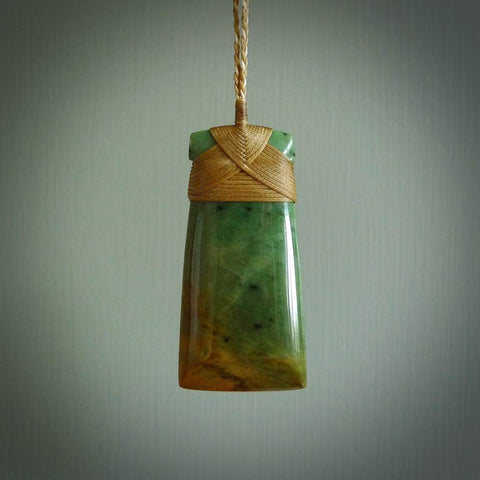
We use New Zealand nephrite jade, or as it is locally called 'Pounamu' (pronounced poh gna moo) or greenstone. This is an outstanding and rare material that is found only in the South West of our South Island. New Zealand pounamu varies greatly in colour - beautiful golden flower jade like the photo above through deep greens and paler translucent green shades.
Carvers will often carve a piece to suit the particular stone they are working with. They use the structure and colour to guide the design and shape. This produces some spectacular free-form carved pendants and necklaces!
Jade carving has a long tradition in New Zealand. Early Māori recognised the material as valuable for making tools, jewellery and for negotiating and striking agreements and establishing relationships among tribes to promote trade. Pounamu, as it is named in Māori, was a very early and valuable form of tender.
With the advent of the iron age, jade's use for making tools diminished and it became primarily valued for its rarity and beauty. This led to a stronger focus on carving jewellery and sculptural pieces in jade. Interestingly, early designs paid tribute to things important to Māori. A matau (or hook) design, a toki, or adze – both objects that were fundamental to a tribes survival, captured in valuable pounamu and worn in honour of these valuable tools.
Jewellery was also carved with spiritual meaning:
- The Manaia, which is believed to be a rendition of a kind God, a pendant worn to establish a connection with ancestors
- The Tiki – First Man, a symbol of loyalty and strength and believed to foster fertility
- The Pikorua, or twist – a symbol of relationships and their enduring and strong foundations. Often gifted to recognise partnerships between individuals, but also given across tribal boundaries to establish connections for trade and to negotiate peace
- The Wheku – the face of an ancestor. These were typically carved in wood and positioned at the gable of a meeting house. A symbol of honour to ancestral spirits. These are also carved in jade and worn as recognition of heritage and regard for one's ancestors.
If you are interested in understanding more about the various carving designs and the spiritual qualities of jade, you can find more information HERE.
Jade is not only a beautiful material, but it is also very tough. In New Zealand, it is formed in our South Island's alpine fault under immense heat and pressure. The molten rock folds, twists and mixes, changing crystalline structures and producing a greenstone of beauty and strength – New Zealand Pounamu. This means that jade jewellery is resilient and will last forever if cared for.
We provide all pieces on hand-plaited, highest quality polyester cord. This is a flexible and strong cord that will last a long time and can be replaced from time to time if necessary. We can make these cords adjustable, or provide then at a fixed length determined by you, with a loop and jade toggle fixture – your choice. Generally, we will supply the pendants with an adjustable cord so that you can position the piece to suit.
Somewhat unique to New Zealand jade is the variation in colour and structure of the stone found here. Minerals around the melting rock become included in the molten mass, and they change the colour and look of the jade as it cools and solidifies. This has produced some glorious variations in our local jade, making it visually unique and very Kiwi. The physical composition of New Zealand jade is the same as nephrite jade found in other parts of the world, but our jade, our pounamu is steeped with our history and certainly has captured and contains a piece of our land.
In New Zealand jade carvings have a spiritual significance that comes from the Māori tradition of handing significant pieces of jade art down through their families. They believe that jade absorbs and hold mana, or the spirit, of every person who has worn it. This gives specific pieces of jade historical and familial value – they become family heirlooms and are regarded as 'Taonga' or treasures. Because the spirits of ancestors are believed to be captured in the stone, these pieces are treated as family members - revered and respected. They form a significant part of the family history, and it is not unusual for the history of the family to be verbally passed on with the particular piece of jade.
This high regard for jade is not unique to New Zealand. Many other cultures also have profound spiritual respect for jade, and it can be found recorded in their histories – the Chinese have mined and worked jade for over 9,000 years and regard it as a symbol of wealth and status. They also, like Māori, believe that it can have a positive impact on physical and mental well-being.
An old Chinese proverb says: Gold has a price, Jade is priceless – it is the unique quality of each piece of jade that stands it apart from other valuable gemstones. This is one of the qualities that is spectacularly evident in jade from New Zealand and which ensures that each piece of hand carved jewellery is individual and unique.
To read more about the different types of New Zealand Jade we use for our jewellery, we have more information for you HERE.
We guarantee the quality of our jewellery and will accept returns up to 30 days of your receipt if the piece you have selected isn't quite what you expected - see our returns policy HERE.
We also use jade from other parts of the world when we find material that is unusual in colour and structure - stone that catches our eye and we think will create unique, beautiful pieces. We identify the source of all of the jade used in each individual piece - this is noted on the product page of each individual piece.
Woolly Mammoth Tusk
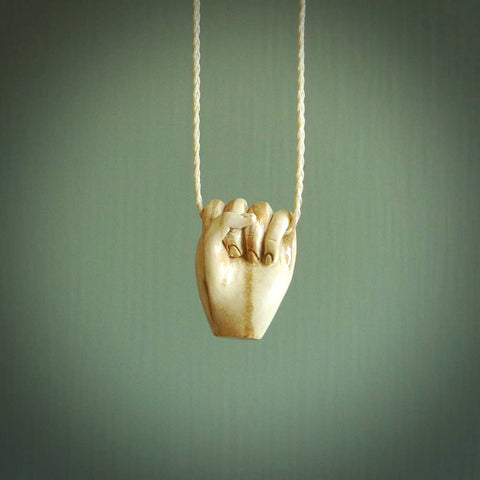
Our Mammoth pieces are all hand carved from Tusk recovered from the Alaskan Tundra.
THE MAMMOTH TUSK USED TO CARVE THE PIECES IN THIS COLLECTION IS 34,690 YEARS OLD (PLUS/MINUS 815 YEARS).
We receive the occasional question about the authenticity of the material, and its age. We know the material's provenance but decided to have it carbon dated to get an accurate measure of its age, and the results are in!
The testing was done for us by GNS Science, a New Zealand Crown Research Institute and New Zealand's leading provider of Earth, geoscience and isotope research - so their assessment of this material is as accurate as is possible using radiocarbon dating technology.
The grain of this tusk is distinctive and quite beautiful. We carve these pieces to highlight the material's natural beauty.
There is a lot of variability in the look of mammoth tusk. Some of our pieces are a pale creamy colour with a very even look - others have unique and very distinctive colouring, particularly where we have used the outer 'bark' of the tusk. Polished to a high sheen these pendants are glossy and very individual.
We have been careful to ensure that the tusk that we source, and use, meets all the regulations that govern the use of bone for the making of jewellery and sculptural artwork.
We have confirmed that our use of Woolly Mammoth Tusk meets our local customs regulations, and that we comply with regulations under the Convention on International Trade in Endangered Species of Wild Fauna and Flora (CITES). This is a multilateral treaty to protect endangered plants and animals.
Black Jade

Our black jade comes from South Australia. We buy this directly from the mine in its raw form and have our carvers make pieces to our designs. We also provide it to artists who carve original, one-off pieces for us.
This is a wonderful material, a true nephrite jade ranging in colour from a jet black through a wonderful liquorice green - we don't know what the stone will reveal until it's cut, so each piece is a little mystery.
The material we use is a medium to fine grain which we polish to varying degrees of sheen depending on the piece. The beauty of this jade is that it is very, very hard and tough which allows our carvers to produce beautiful, detailed carved jewellery.
Natural Bone

Our natural bone carvings are predominantly made from cattle bone. Where we use other bone - deer antler or boars tusk - we will note this on the product page.
We call this material natural bone because we do not treat or whiten it in any way. This means that there will be slight variations in the colour of each piece. The beauty of natural bone is that it will age to a lovely golden colour over time as it absorbs body oils.
Pāua Shell

Cold Water Pāua: the pāua that we use live in cold waters of the coast of our South Island. They grow slowly which produces a very hard shell and very striking and vibrant colours - perfect for original and eye-catching jewellery.
Pāua is the Māori name given to three species of marine gastropod molluscs. They are known in the United States and Australia as abalone, and in the United Kingdom as ormer shells.
Maori legend suggests that Pāua is a gift from Tangaroa, the God of the Sea. Pāua is regarded as a Taonga (treasure), as a source of food and as a beautiful shell used in their carving to illuminate eyes and adorn other artwork.
Cords
We use a waxed polyester for our cords. This material is extremely tough and will stand up to almost anything that you can throw at it! We hand plait our cords and do most of the binding ourselves - so if you see a piece and would like a different coloured cord or a different binding, just let us know.
If you swim in the ocean rinse the cords from time to time in fresh water to flush away the salt - your cords will thank you for it!
NOTE: We identify and declare the material used for each piece we have for sale on the product page. If you have any questions about any of our products use our online chat, email or just give us a call and we'll do our best to help you.
- Choosing a selection results in a full page refresh.